
How to Get Court Records
Every Morrow court record request begins at the office that keeps the file. For Common Pleas General Division and Domestic Relations legal dockets, filings, copies, and certifications, that means one place. The answer is the Morrow County Clerk of Courts Legal Division. Morrow Municipal Court keeps its own computerized records for criminal, traffic, civil, and small-claims cases. Probate and Juvenile files run through their own Common Pleas clerk channel. Name the division up front. Your Morrow request then lands at the right counter instead of the wrong one.
- Collect the Morrow case number, court, division, party information when appropriate, approximate date, and the document or docket needed.
- Use CourtView or a Municipal Court search to locate the public case history and describe the target record accurately.
- Choose the Morrow custodian: Common Pleas Legal Division, Municipal Clerk, or the Probate or Juvenile clerk channel.
- Ask whether a plain copy, certified copy, docket printout, filed document, recording, or transcript is available and public.
- Confirm current fee, payment method, submission method, identification requirement, and processing procedure before sending a Morrow request.
There are several ways into Common Pleas records. CourtView works online. The Legal Division counter at 48 E. High Street in Mount Gilead takes walk-in requests. You can also call 419-947-2085. Or mail a written request once the clerk confirms the current process. The posted legal fax is 419-947-5421. Morrow Municipal records are available through the public forms. Room A in the courthouse also handles them. So does phone at 419-947-5045, or email at info@morrowcountymunict.org. There is no single universal court-copy form, no payment-by-mail rule, and no turnaround promise. Confirm details with the clerk before you send anything.
Morrow Court Record Custodians
Not every file in the courthouse belongs to the Morrow County Clerk of Courts. The elected Clerk's Legal Division holds Common Pleas General and Domestic Relations legal records. The Municipal Court public system draws on Morrow Municipal Clerk records. Probate and Juvenile clerks maintain and docket their own division files. So a Common Pleas legal case file never travels through the title office. That office sits at 80 North Walnut Street.
Morrow County Clerk of Courts Legal Division
48 E. High Street
Mount Gilead, OH 43338
419-947-2085
Morrow County Municipal Court
48 E. High Street, Room A
Mount Gilead, OH 43338
419-947-5045
The Morrow Clerk of Courts keeps its own forms directory online. That page shows which request forms the office uses for Morrow County court records.
The forms directory is a handy Morrow starting point for finding clerk channels. It does not, however, establish any standard court-copy request form for every case.
Types of Court Records
Morrow court records come in several forms, and mixing them up slows a request. A docket or case history is a chronological index of actions and settings. The filed document underneath it is the actual complaint, motion, order, or judgment. A certified copy carries the clerk's certification. A transcript, by contrast, comes from the court reporter or recording process. It does not come from the Clerk's paper file. Know which Morrow record type you need before you ask.
- Morrow docket or case history, showing events and settings in chronological order.
- Filed pleadings, motions, orders, judgments, and other public case-file papers.
- Plain paper copies of a Morrow public docket or document.
- Certified copies issued by the Morrow clerk that maintains the record.
- Courtroom audio or video and transcripts, which follow separate Morrow court procedures.
- Probate or Juvenile division files, subject to their own Morrow custodian and access limits.
Bankruptcy files live apart from county records. The Southern District of Ohio Bankruptcy Court runs its own federal system, so those case records never pass through the Morrow County Clerk.
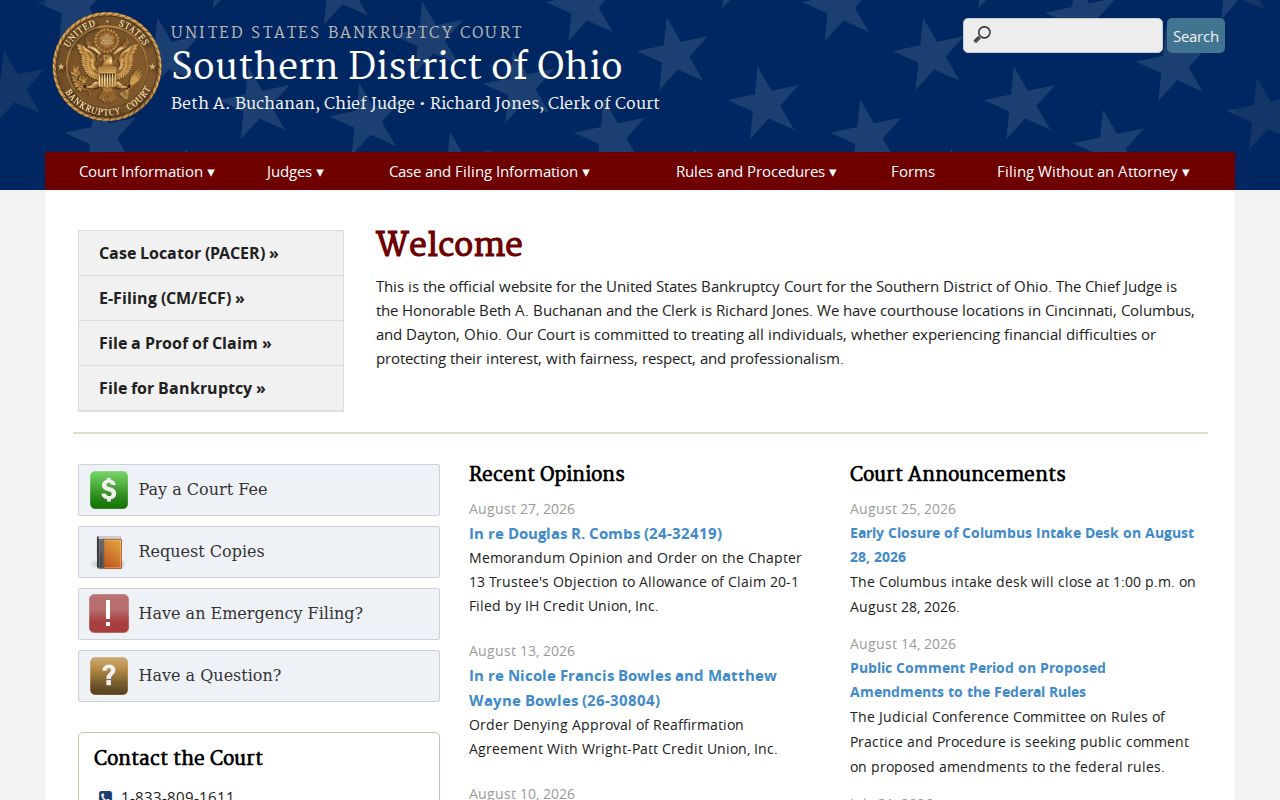
The bankruptcy court point is simple: route each Morrow County court-record request to the court that created the file. Federal filings live in a different system entirely.
Morrow CourtView Index Limits
Morrow CourtView eServices offers Common Pleas Case Inquiry, attorney e-filing, and payment access. The public entry runs a CAPTCHA before any search. Its Internet Services Disclaimer states that CourtView provides indices. Online indices are not official records. The office index controls when the two conflict. Updates generally land daily except weekends and holidays. Still, they are not guaranteed, and maintenance can interrupt access. Those limits matter when you need a file for a court purpose. The index can locate a docket, but only a clerk-issued copy verifies the record. Availability also varies with case type, filing date, access restrictions, and the portal session. Email does not count as a filing or legal-notice method unless the Clerk authorizes it. So never treat a Morrow search display as a substitute for the official Clerk record. Note: If a Morrow CourtView entry is missing or incomplete, ask the proper clerk. Check whether a public docket or copy exists before concluding anything from the index.
Morrow Legal Division Records
The Morrow County Clerk of Courts Common Pleas Legal Division handles these requests. It is the channel for General Division and Domestic Relations docket, filing, copy, and certification requests. Its CourtView Case Inquiry link serves as a public index route. The clerk-side record process runs through the Legal Division counter at 48 E. High Street. The title division is a separate office. It should not receive a Common Pleas legal case-file request. When you make a Morrow request, give the division, case number, document title, and approximate filing date. Say whether you need a plain or certified copy too. The Clerk posts no standard mail-copy form, payment-by-mail rule, identification rule, or processing time. Ask the Morrow Legal Division to confirm its current procedure. Do that before sending paper, fax, email, or payment.
Morrow Municipal Record Disclaimer
Read the fine print before trusting a Morrow Municipal Court search result. The court's public-search disclaimer explains that displayed information comes from computerized records kept by the Municipal Clerk of Court. The data is public. But the court gives no warranty of accuracy, reliability, or suitability. So a calendar or history result can point you to a case. For anything official, the clerk or a certified record is still the way to verify it.
The distinction matters most for traffic and small claims. A waiver-payment result only covers cases eligible for online waiver payment. It is not a full record-request tool. It is not a complete payment ledger. Nor is it a stand-in for the actual Municipal case history. When you need the real thing, ask the Morrow Municipal Clerk for the docket printout, filed document, certification, payment history, or transcript path that fits your case.
What a Court Record Contains
Ohio Revised Code 2303.12 defines what sits inside a Common Pleas case file. Think pleadings, motions, orders, and judgments, the original civil or criminal documents themselves. The statute also names the record books around them: the general docket, appearance docket, trial docket, journal, execution docket, and the case files. One caution for Morrow County. A public file can show less than the full paper or electronic case file, because a record may be restricted, redacted, not yet digitized, or held in another division.
| Case Number | The Morrow court-assigned identifier that connects all entries and requested documents. |
|---|---|
| Pleadings | Documents that begin or respond to a claim or charge, such as a complaint, petition, answer, or indictment. |
| Orders and Judgments | Recorded Morrow court directions and rulings, including an order setting a hearing or a final judgment. |
| Docket Sheet | The chronological Morrow record of filings, notices, settings, motions, orders, and other case activity. |
| Exhibits and Recordings | Materials that may have separate access restrictions, custodian procedures, or authorization requirements. |
A docket is a finding aid, not the paperwork itself. It gives you the document title and its filing date, nothing more. Take the case number, the date, and the document description to the Morrow clerk when you want a paper copy or a certification.
Morrow Probate Record Retrieval
Older Morrow Probate records take extra planning. The Probate Division reports that courthouse renovation moved many older files offsite. It directs people to arrange retrieval through the Probate Clerk. The Juvenile and Probate clerk information adds that some Probate research, genealogy included, can require advance contact. Access is limited there. That is a local retrieval hurdle, not evidence that an older Morrow record was destroyed or lost.
The Probate and Juvenile clerks process, docket, maintain, and answer requests for both divisions. Their public filing window sits on the courthouse third floor near the stair-top waiting area. Phone is 419-947-5575. Fax is 419-947-1270. Juvenile files carry added confidentiality limits. Call before you visit about an older Probate file. Ask which public retrieval process applies.
Certified Copies and Fees
Know the difference between the two products. A plain Morrow copy just reproduces the public record. A certified copy comes with the maintaining clerk's certification attached. The Morrow Common Pleas fee schedule lists $0.35 per page for printed copies plus a separate $3.00 certified-copy line. The sheet stays silent on whether that per-page charge stacks onto every certified copy, so confirm the total with the Legal Division before you pay. And remember, filing fees are not public-copy prices.
| Morrow Common Pleas item | Posted amount |
|---|---|
| Copies printed | $0.35 per page |
| Certified copies | $3.00 |
| Certificate of judgment, to make | $5.00 |
| Certificate of judgment, to file | $23.00 |
For certified copies and related court forms, the Morrow County Court of Common Pleas forms page lists what the Legal Division publishes.
Forms are division-specific in Morrow County, so start with the Common Pleas forms route. For dollar amounts, the posted fee sheet still governs copies and certification.
Morrow Court Recording Copies
Recordings follow their own path in Morrow County. Official recordings are audio and video in the main courtrooms, audio only elsewhere. A copy costs $10. Attorneys, self-represented parties, and designated stenographers can review or listen free by appointment. Anyone else needs counsel present or court authorization. That is the local recording procedure. It is not a promise that every hearing is public in every format.
A transcript is not a recording copy, either. The Clerk's case file does not automatically hold the transcript. Ask the court for the court reporter or recording request channel. Common Pleas e-filing rules also require depositions and transcripts to be filed as hard copies. That rule is about filing mechanics. It does not turn transcripts into online Morrow records.
Public Access and Sealed Records
Rules, statutes, and orders control what is public in Morrow County. A search can locate material open for inspection, yet it proves nothing more. It does not show that every record is public, current, complete, or certified. Domestic Relations and Juvenile files face real limits. Personal identifiers can be omitted or redacted. Treat a sealed conviction matter, a confidential juvenile file, or any other restricted record as off-limits. It is not an ordinary Morrow search result.
Key Rules:
Ohio Revised Code 2303.12 requires Common Pleas clerks to keep specified records and provides online-access rules for certain civil and criminal general-docket materials while preserving exceptions.
Ohio Rules of Superintendence Rules 11.10, 11.13, and 11.14 provide the current framework for public access, personal-identifier omission, and court-ordered access restrictions.
Ohio Revised Code 2953.32 governs the court process for sealing eligible conviction records.
Ohio Revised Code 2151.14 makes juvenile-court records confidential except as Ohio law permits.
Never try to dodge a Morrow restriction. Ask the custodian what public version exists, then follow the procedure for an authorized requester. The county public-records route covers county administrative records. It cannot replace the court clerk process for a Morrow case file.
Morrow Court Records Rule 11
Ohio gave its public-access rules a new structure in July 2026. The Rules of Superintendence now put the framework in Rule 11.09 through Rule 11.17. That shift matters for Morrow court records. Any citation to the old former Rule 45 is outdated. It should not guide your request today.
The new rules cover the presumption of access, the omission of personal identifiers, remote versus direct access, and court-ordered restrictions. So a docket entry you view online may show less than what you can read at the counter in person. A statute, a protective order, or a confidentiality provision can narrow access too. Ask first whether a public version of the Morrow County case file exists. Ask which Morrow clerk or division holds it.
Note: the rule citation explains the limits on access. But a Morrow court order or clerk direction for a specific case file always controls.
Morrow Court Records Federal Split
State court files in Morrow County and federal case files are two different worlds. The Morrow County Clerk keeps the local docket. Federal matters live in a separate system, one that includes the Southern District of Ohio. A records request filed with the county clerk will not pull a federal district-court or bankruptcy file. Check the court named at the top of the case caption first. That one detail tells you which system to use. Federal docket access runs through PACER.
PACER's official docket-access page lays out the court-system split. It helps anyone tracing Morrow County court records into the federal arena.
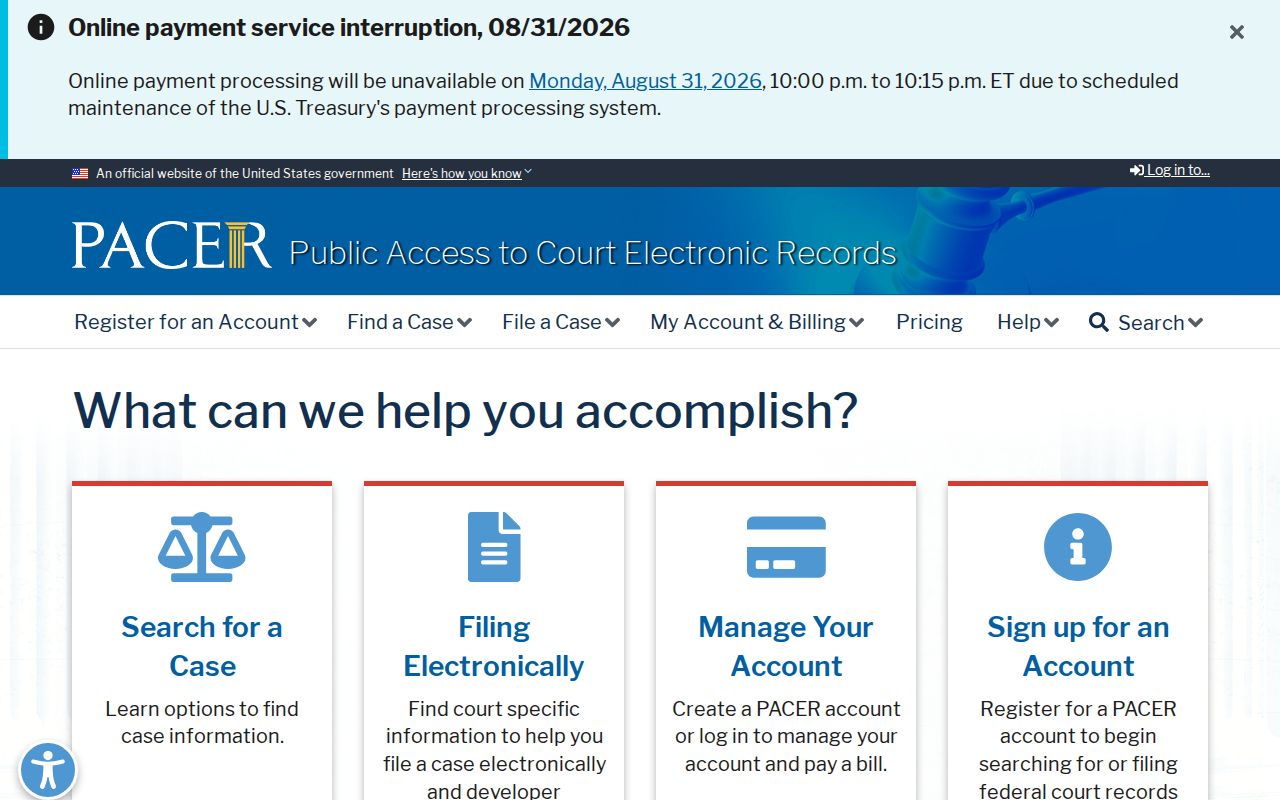
PACER shows the separate federal route in action. It helps keep a Morrow court-record request pointed at the right court, state or federal, from the start.